
Veg
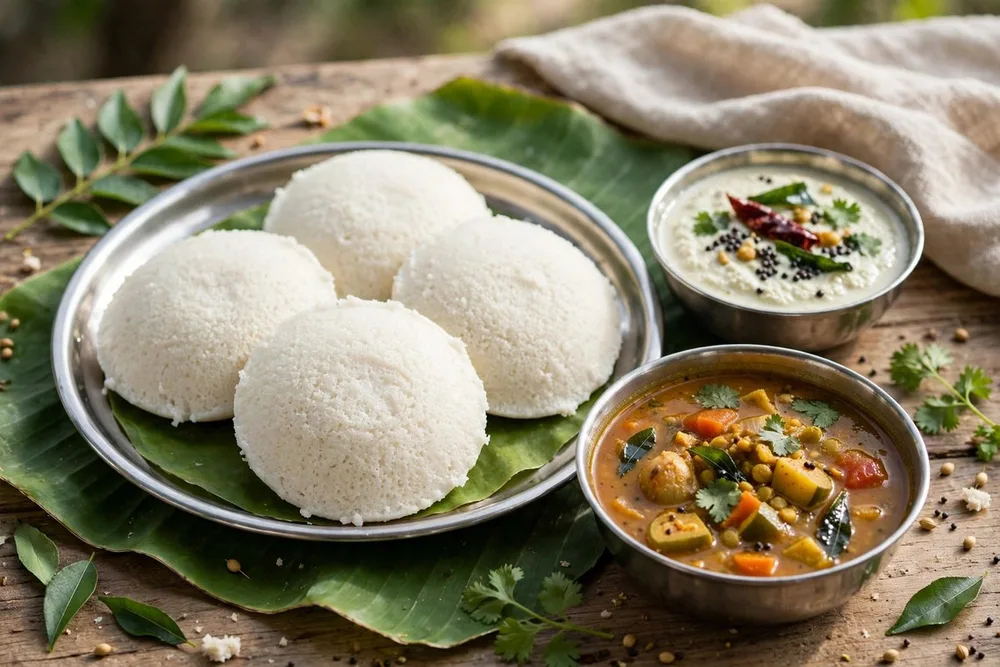
South IndiaSoft, steamed rice cakes — the plain, gentle base of a South Indian breakfast, served hot with sambar and chutney.
Base 10 Pax512measy
Cost 100 PaxView Spec
Standardized commercial formulations for Indian catering operations, banquets, and high-volume kitchens. Scale from 10 to 500+ guests with published batch ratios, critical control points, and illustrative food costs.
Catalog
175
Standardized Dishes
Regional Belts
5
South, North, East, West, Pan
Scaling Tables
10–500
Published Pax Columns
Spec Completeness
11 / 11
Sections per Recipe
Scaling principles, base gravies, allergen controls, banquet menus, and costing formulas.
Non-linear spice adjustments, evaporative loss, and salt calibration.
Makhani gravy, onion-tomato masala, ginger-garlic and biryani bases.
Cross-contamination controls and 8 tracked allergens across all 175 dishes.
Wedding morning tiffins, royal Awadhi banquets, and regional feasts.
Transparent formula from raw APMC mandi rates to per-portion ingredient cost.
Bain-marie holding limits, degchi capacities, and reheating SOPs.
Filter by regional belt, dietary preferences, meal courses, and keyword. The 175 book recipes include standardized production and costing notes.
Soft, steamed rice cakes — the plain, gentle base of a South Indian breakfast, served hot with sambar and chutney.
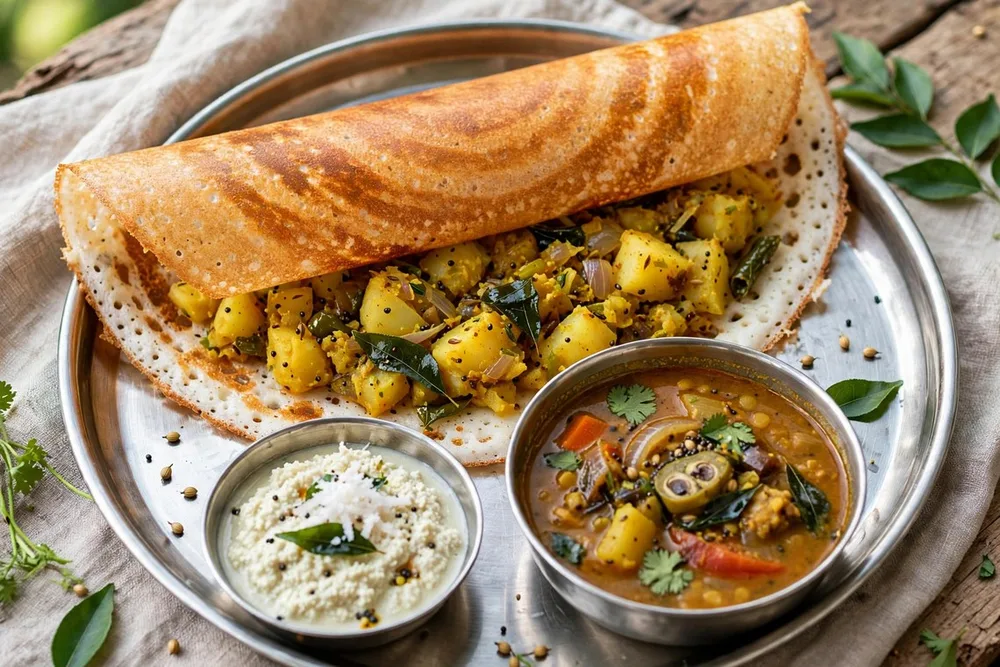
Crisp golden rice crepe folded over spiced potato masala — the South Indian dish most guests ask for by name.
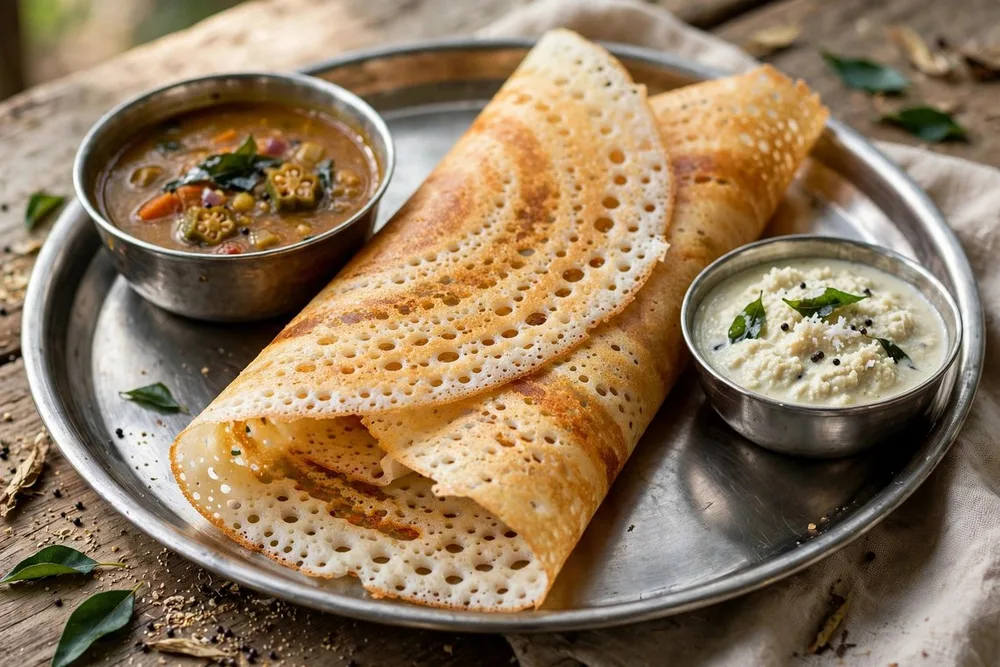
Lacy, crisp semolina crepe with holes all over — no fermentation, mixed and poured straight onto a hot griddle.
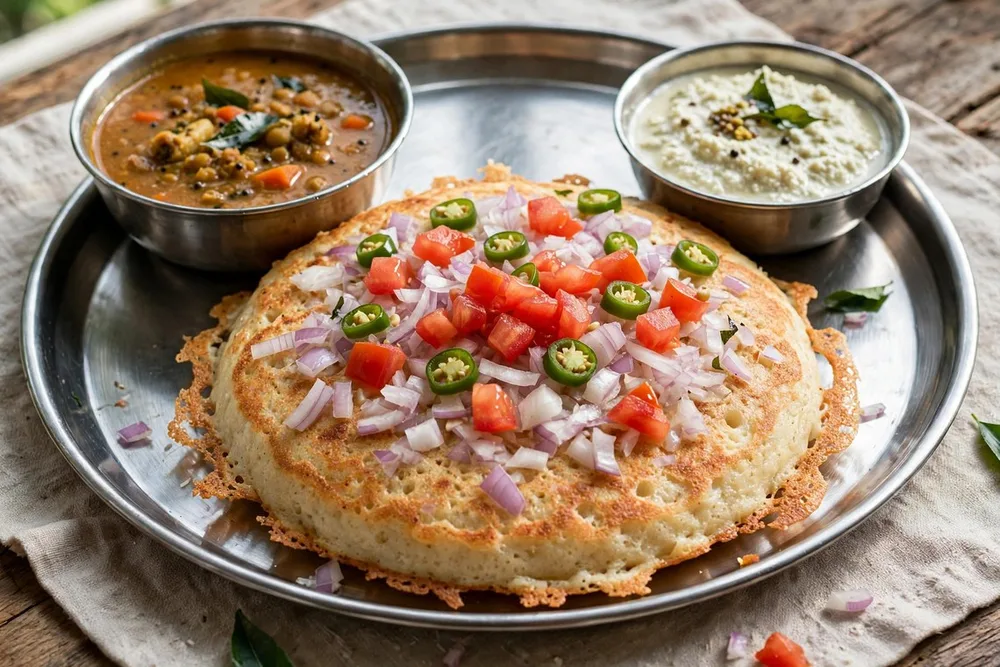
Thick, soft dosa topped with onion, tomato and green chilli — cooked on one side, eaten with sambar and chutney.
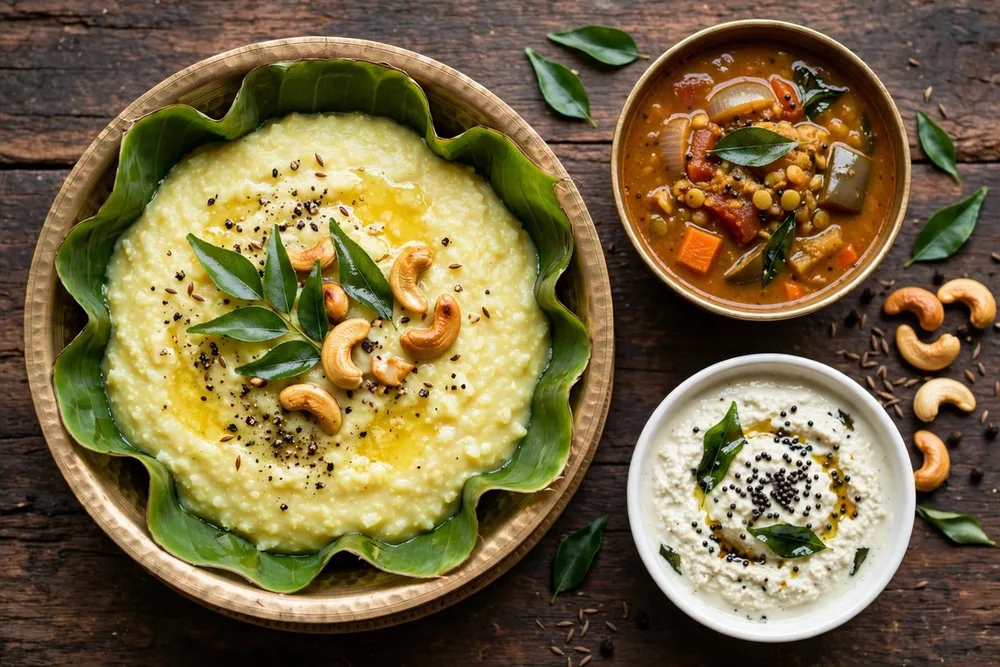
Creamy rice and moong dal porridge with a pepper–cumin ghee tempering. A temple and wedding-breakfast classic — soft, mild, served hot in small fresh batches.
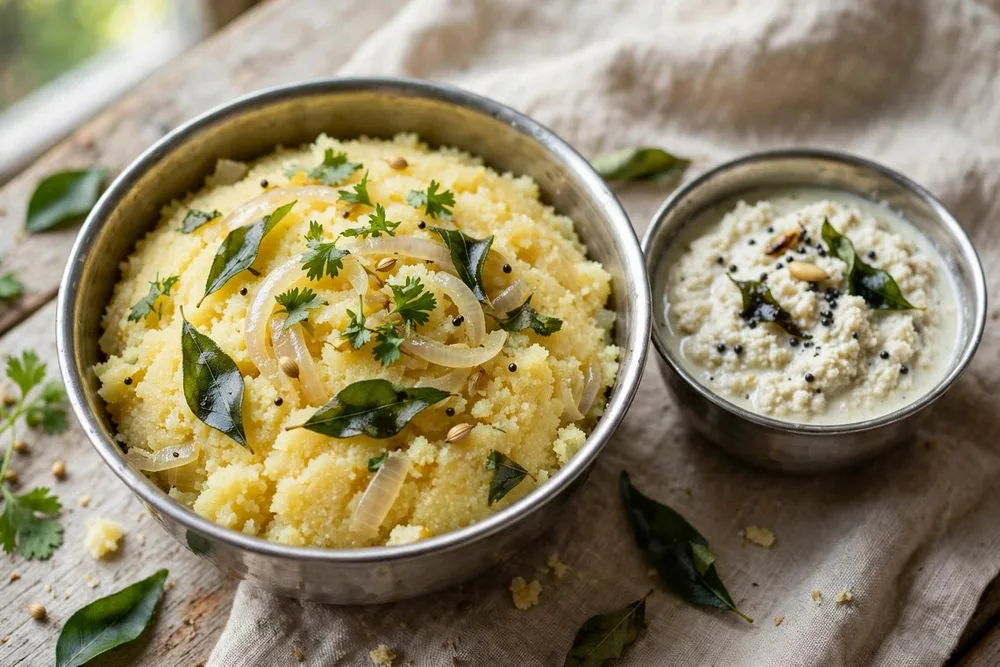
Soft semolina porridge with onion, green chilli and a mustard tempering — the quick breakfast that uses one pan and no fermentation.
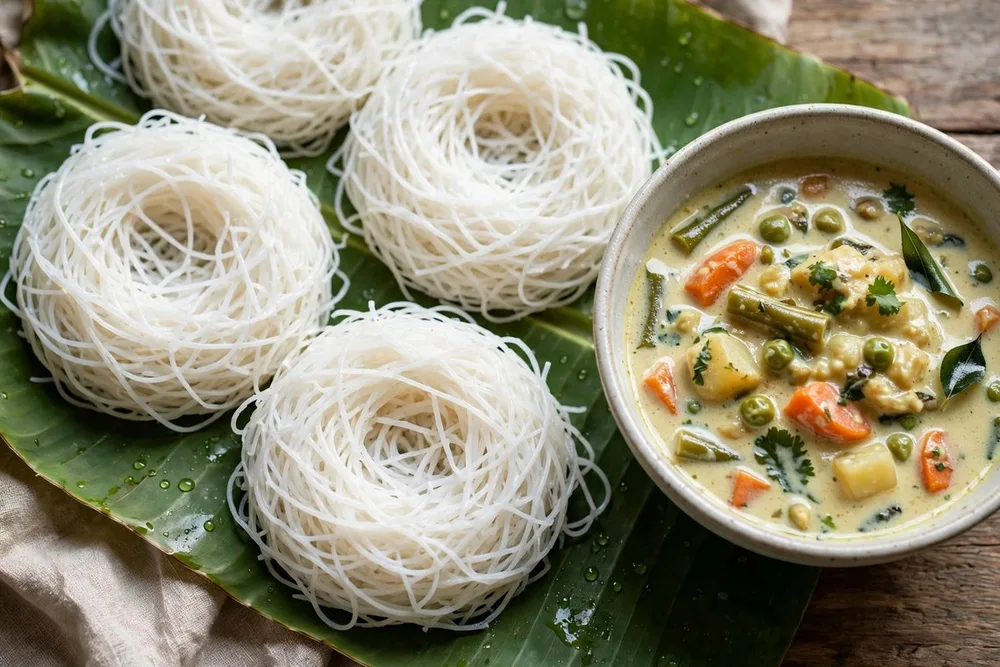
Soft nests of steamed rice-flour noodles — delicate, plain and made to soak up curry, stew or sweetened coconut milk.
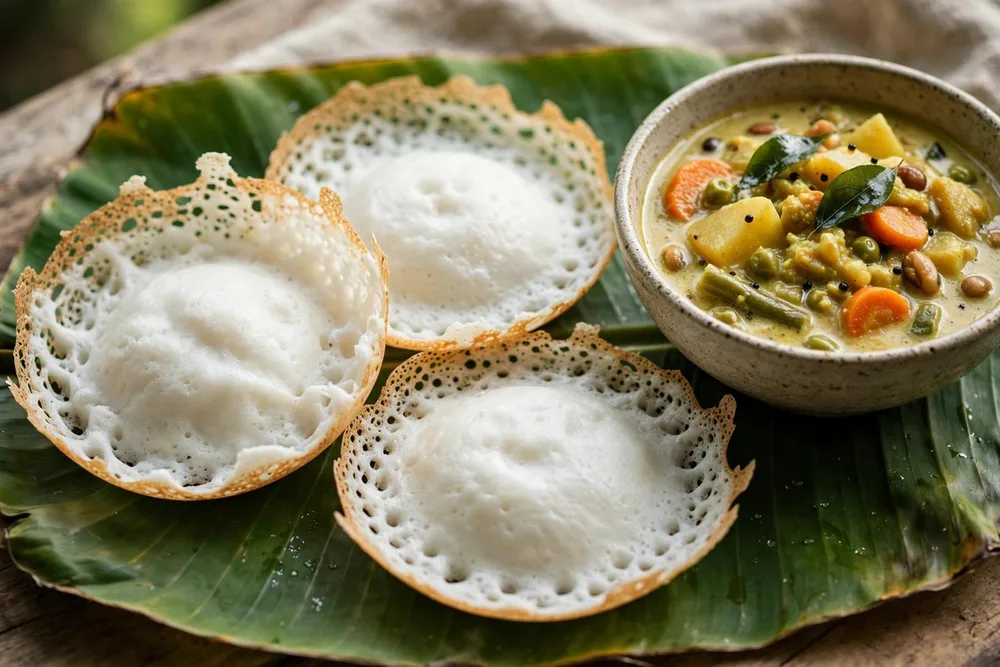
Lacy-edged rice pancake with a soft, spongy centre — cooked in a curved appam pan, made for scooping up stew.
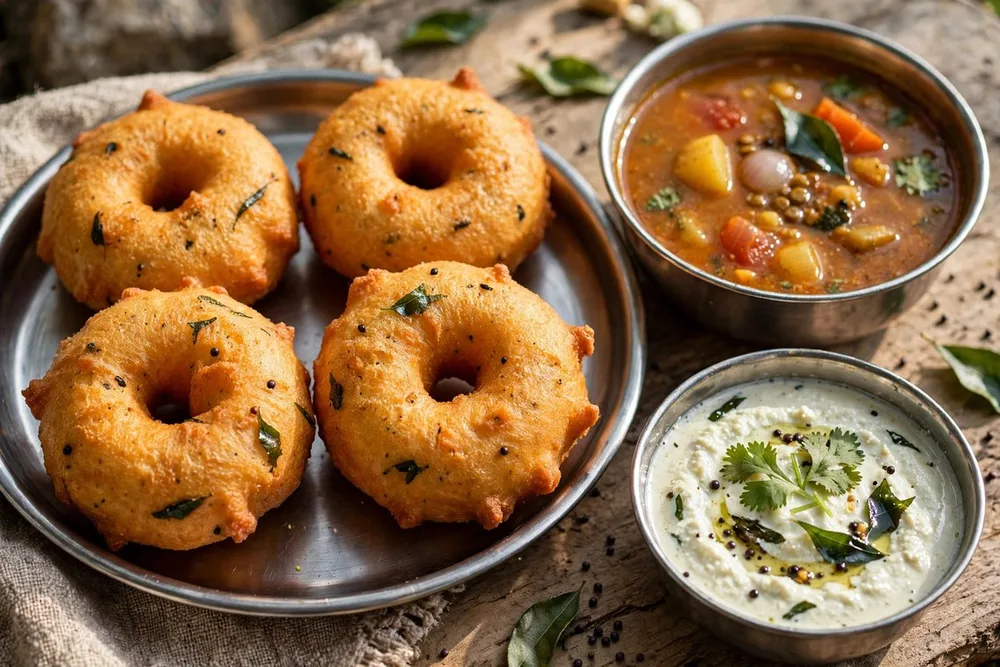
Crisp golden urad-dal doughnuts with a soft centre — the fried partner to idli, pongal and sambar at every South Indian breakfast.
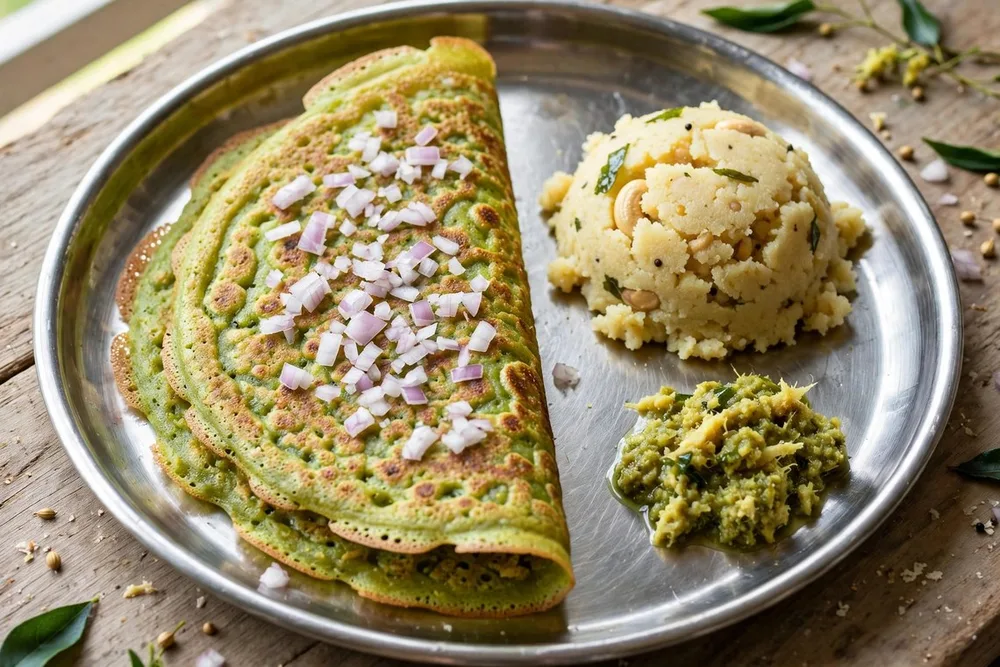
Green-moong crepe from Andhra Pradesh — no fermentation, crisp at the edges, served with ginger chutney and upma.
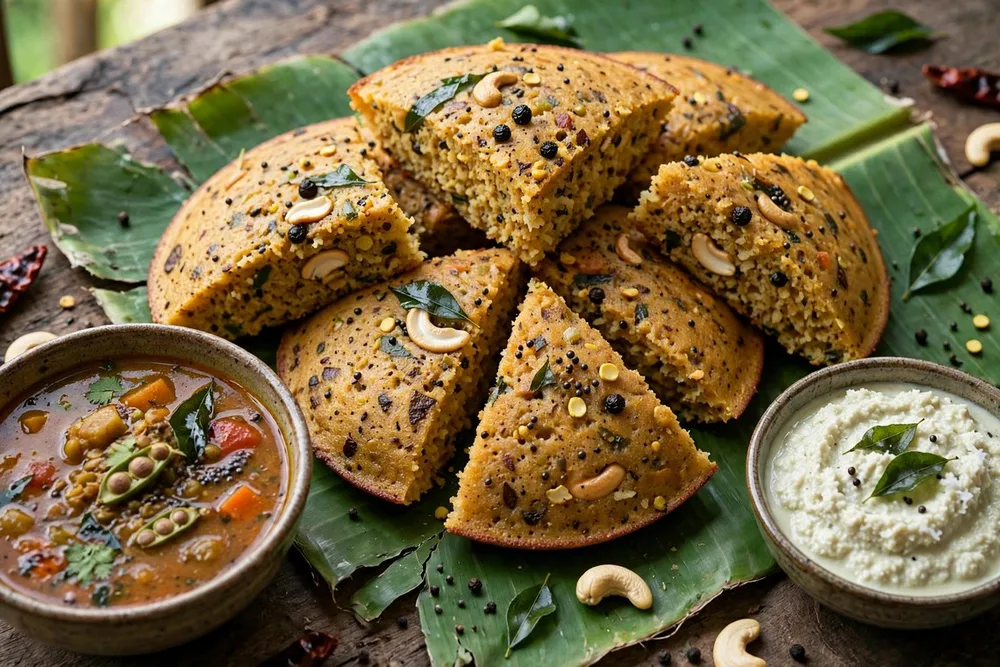
Spiced, peppery idli from the temple town of Kanchipuram — studded with pepper, cumin, ginger and cashew, steamed in a deep vessel.
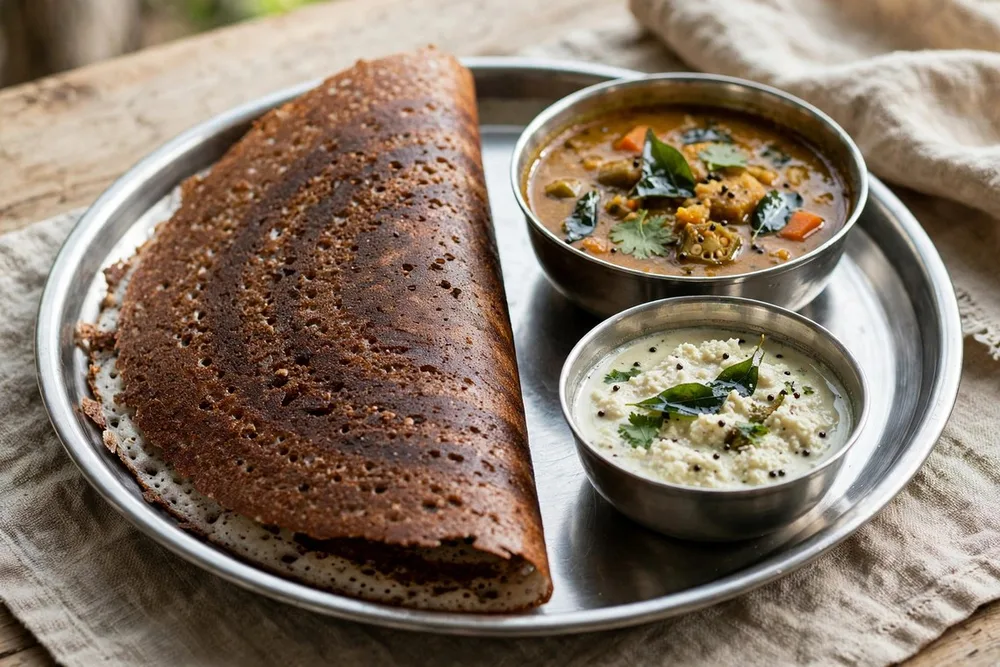
Dark, earthy finger-millet crepe — crisp, filling and quick, with no fermentation needed.
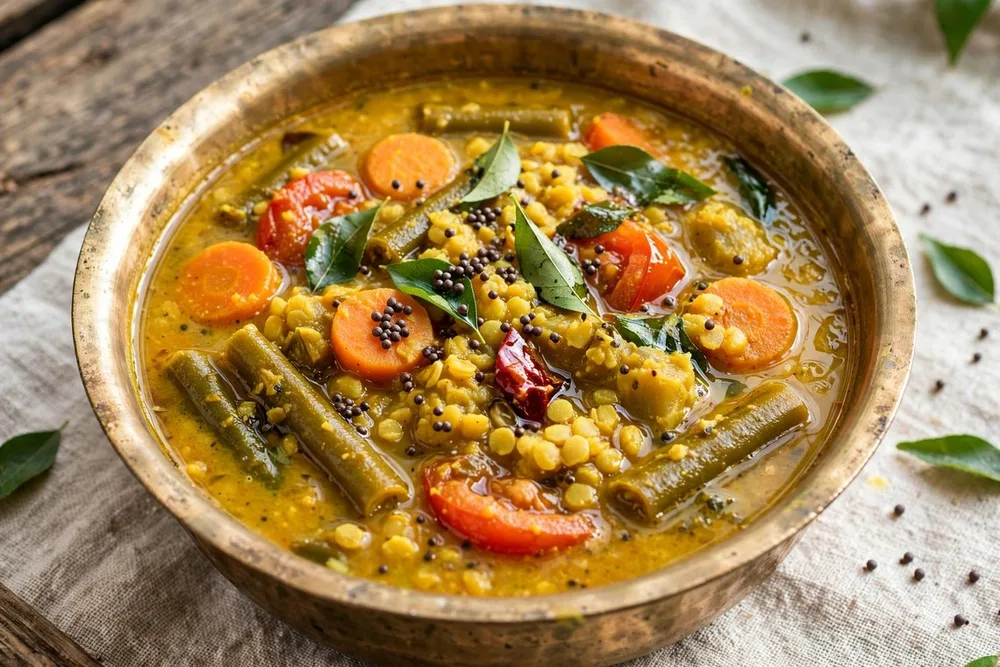
The lentil-and-vegetable stew that anchors every South Indian meal — toor dal, tamarind, vegetables and a fresh tempering.
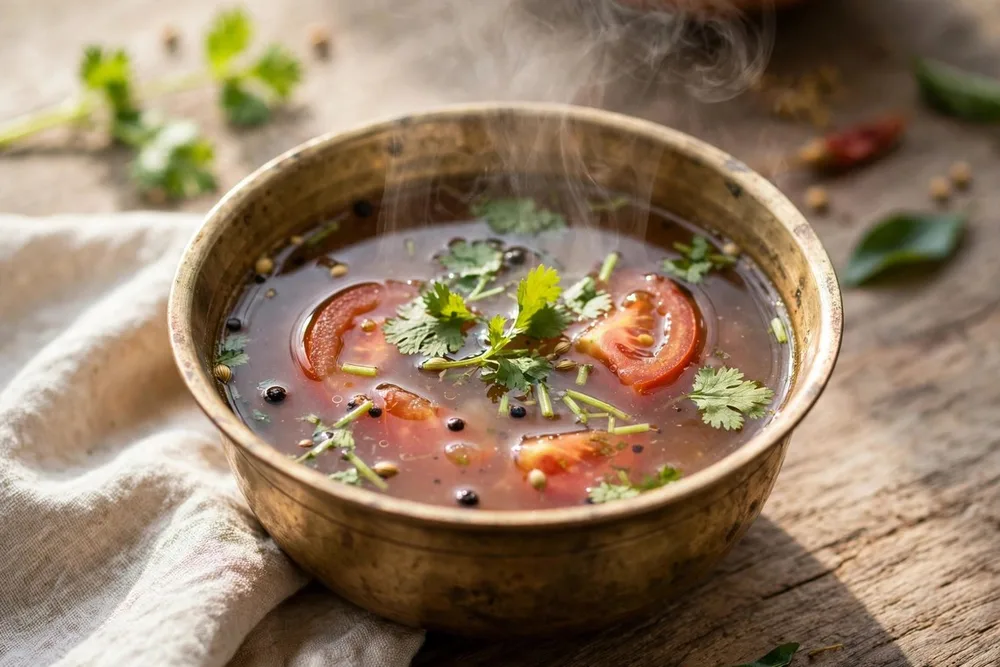
Thin, peppery tamarind broth — light, digestive and served as a soup course with rice at lunch.
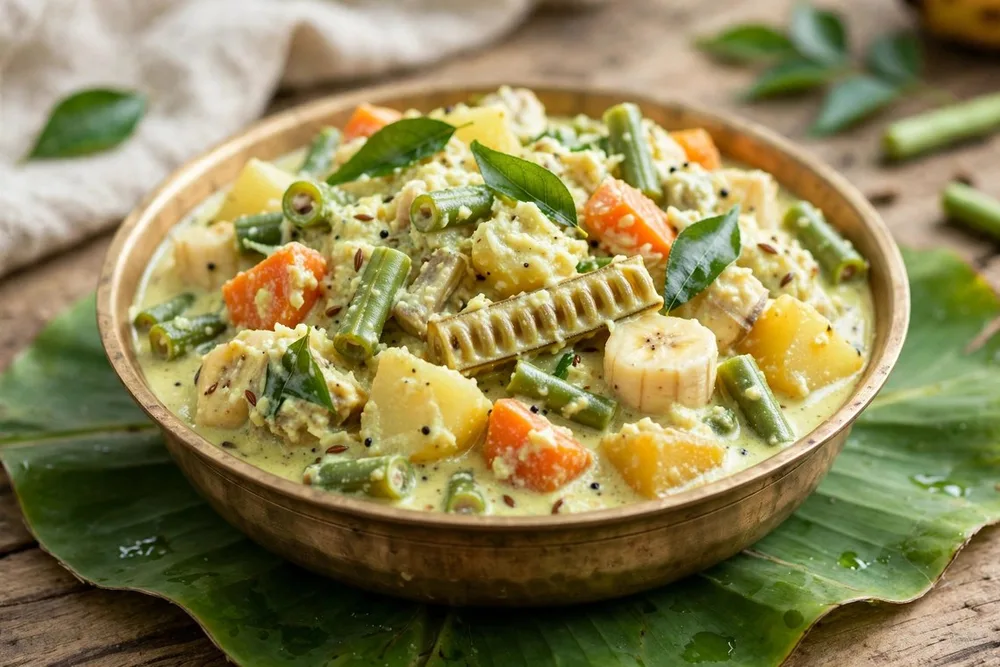
Mixed vegetables in a coconut–curd sauce — the Kerala sadya dish that uses up every vegetable in the kitchen.
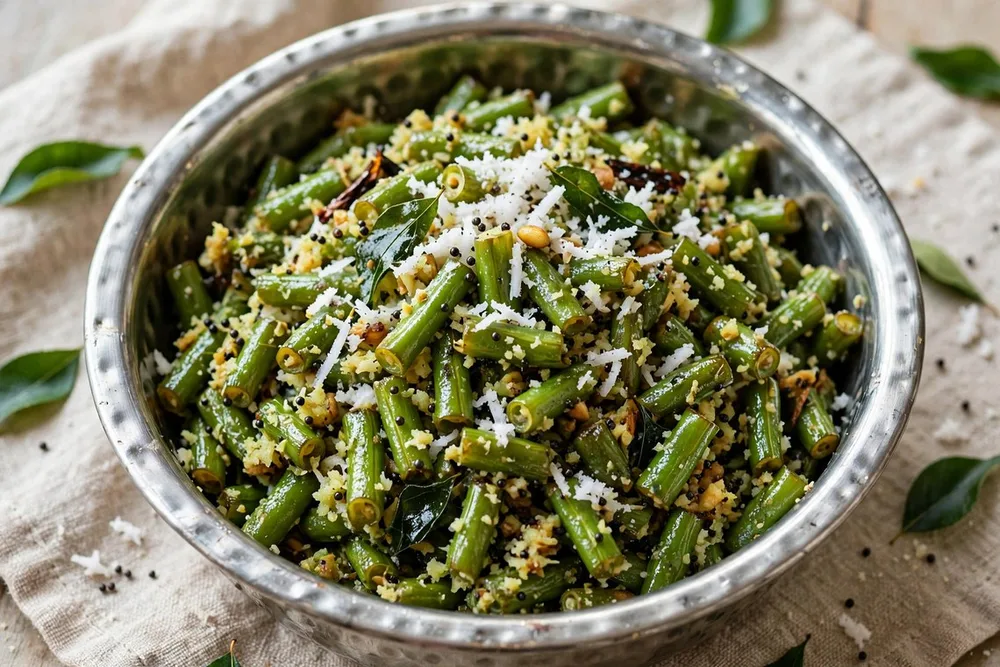
Stir-fried French beans with coconut and a mustard tempering — the everyday dry vegetable of a Tamil lunch.
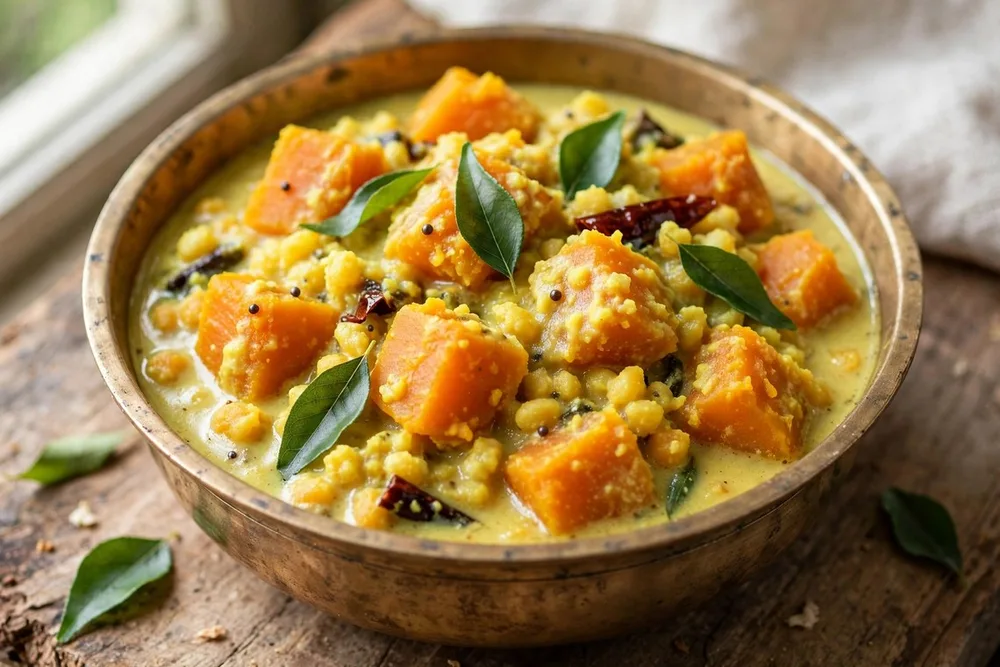
Soft pumpkin and moong dal cooked together with coconut — mild, sweet and the comfort dish of a Tamil lunch.
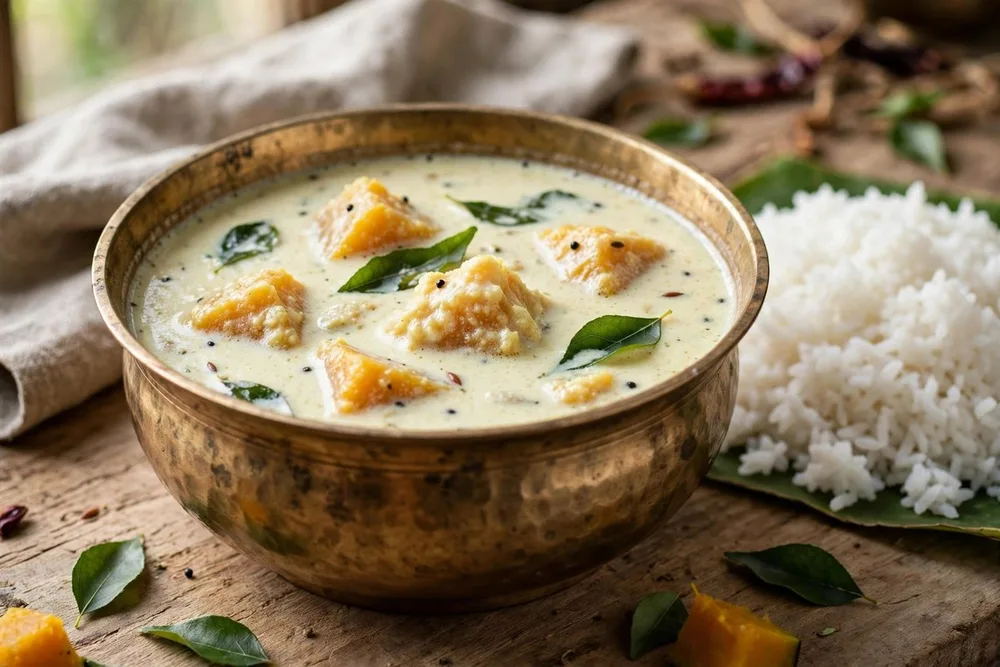
Tangy buttermilk gravy with vegetables — light, cooling and the dish that finishes a heavy wedding lunch.
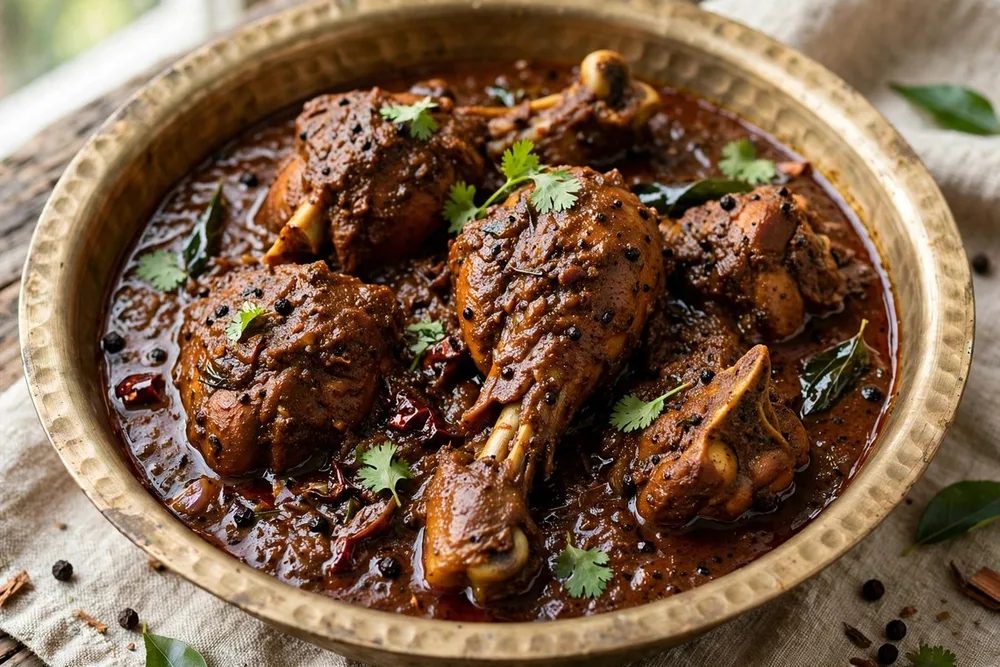
Fiery, peppery chicken curry from Chettinad — roasted spices, black pepper and a dark, fragrant gravy.
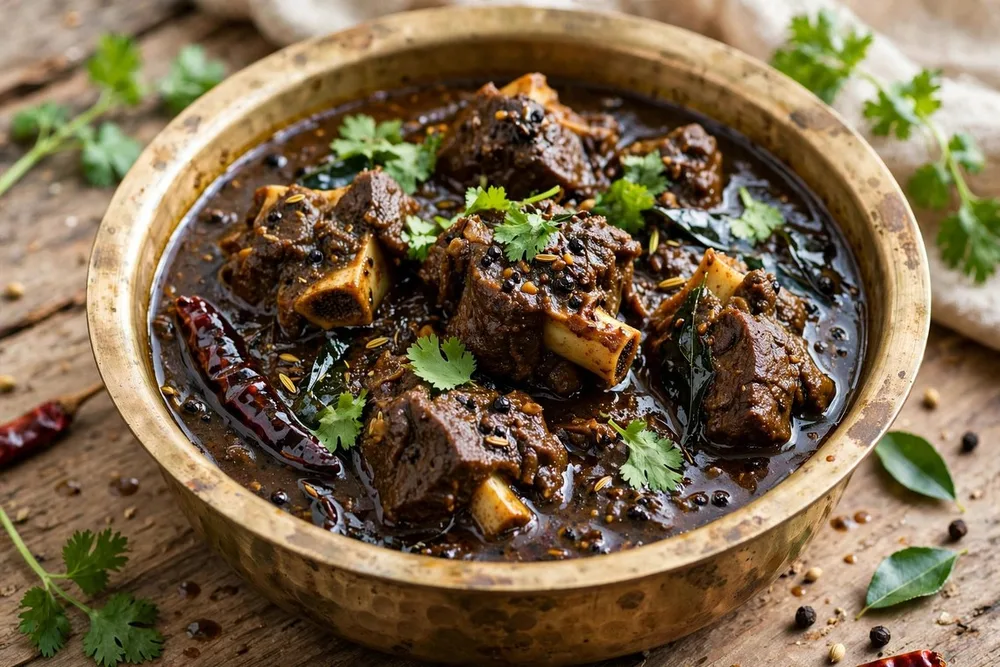
Slow-cooked mutton in a tamarind–spice gravy — rich, dark and the centrepiece of a Tamil non-vegetarian wedding lunch.
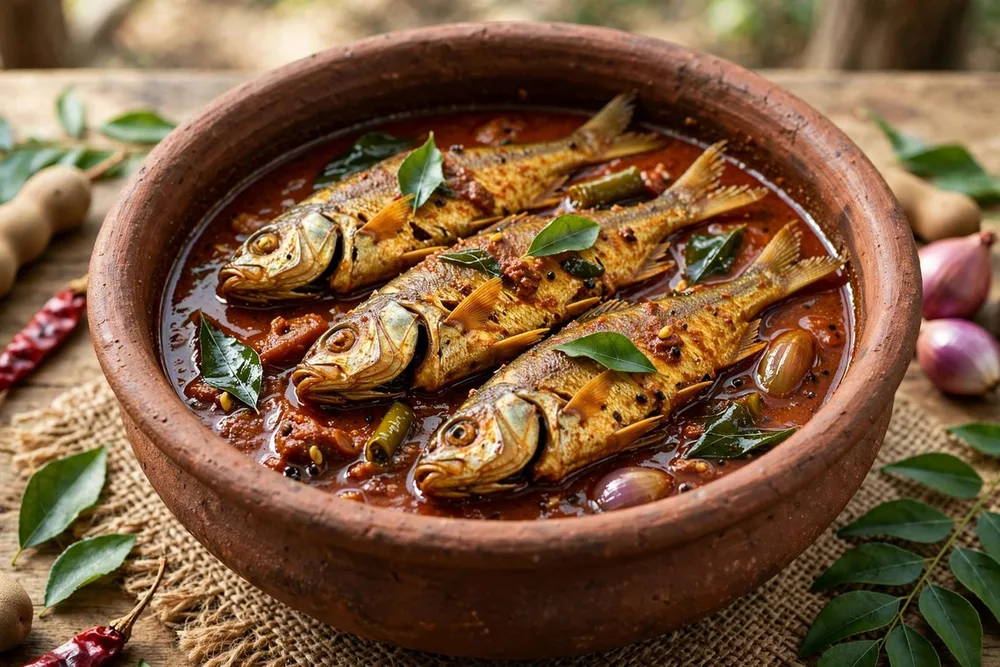
Tamil fish curry in tamarind gravy — tangy, spicy and cooked gently so the fish stays in whole pieces.
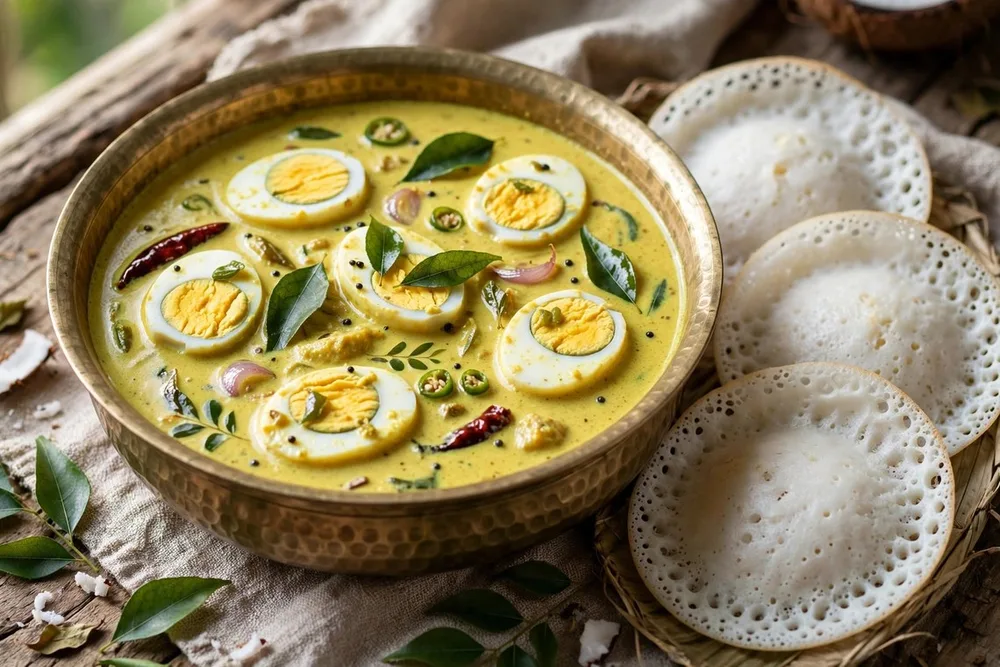
Boiled eggs in a coconut-milk gravy — mild, creamy and the classic partner for appam and idiyappam.
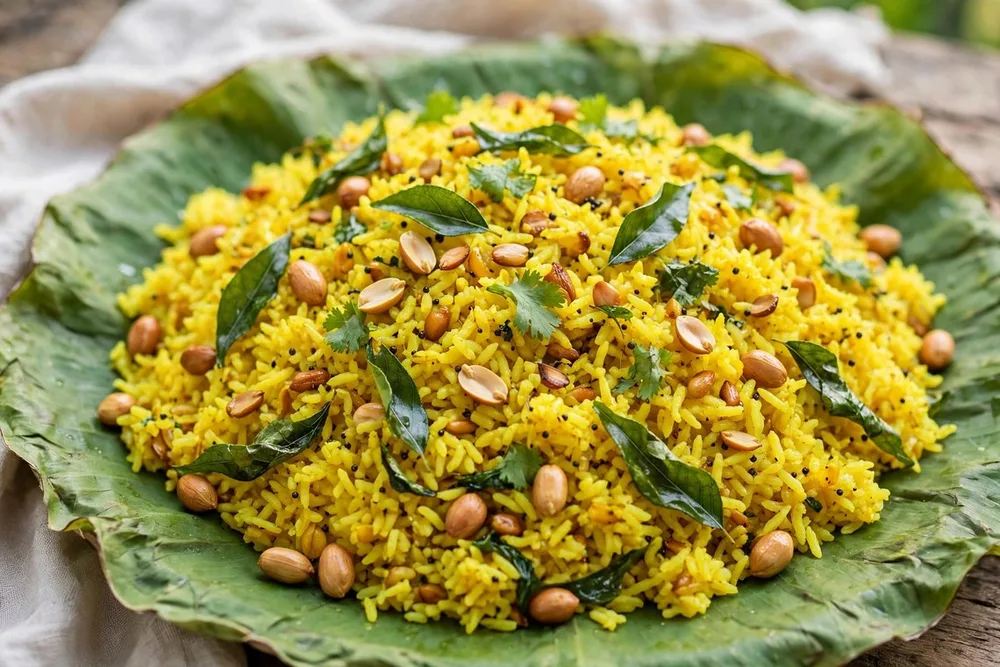
Bright yellow rice with lemon, peanuts and a mustard tempering — the travel food of South India, packed for journeys and festivals.
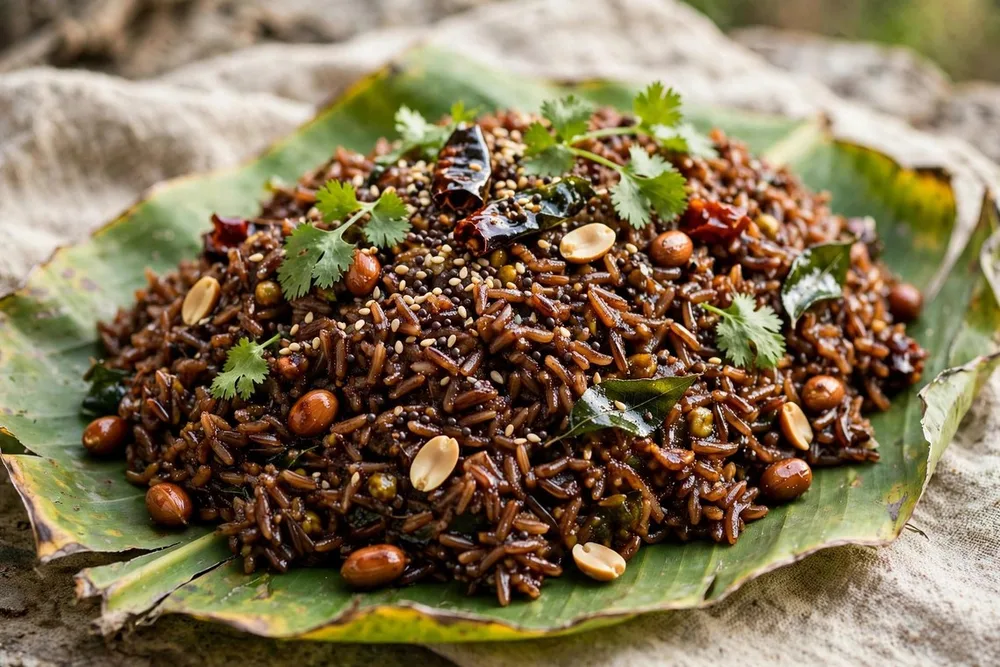
Tangy tamarind rice with a roasted spice paste — dark, sour and the festival rice of Tamil Nadu.
Preventing broken gravies, controlling kitchen shrinkage, and fixing flavor balance.
Master the culinary science of balancing excess acidity in Indian gravies using caramelized onion reductions, dairy fats, jaggery, or alkaline buffers without diluting spice integrity.
Discover the exact soak times, urad-to-rice ratios, wet-grinder aeration physics, and temperature management required for restaurant-quality mallige idlis.
How professional Indian restaurant khansamas extract natural capsanthin carotenoids from Kashmiri and Deggi chillies into hot fat for vibrant crimson gravies.
Step-by-step guide to executing the ancient Dhungar charcoal smoking technique in modern kitchens safely for dal makhani, biryanis, and kebabs.
Book rates are illustrative planning reference figures. Launch our AI Food Cost Calculator to plug in live Koyambedu, Azadpur, or Vashi mandi rates, calculate cooking fuel and labor, and export instant PDF client quotations.