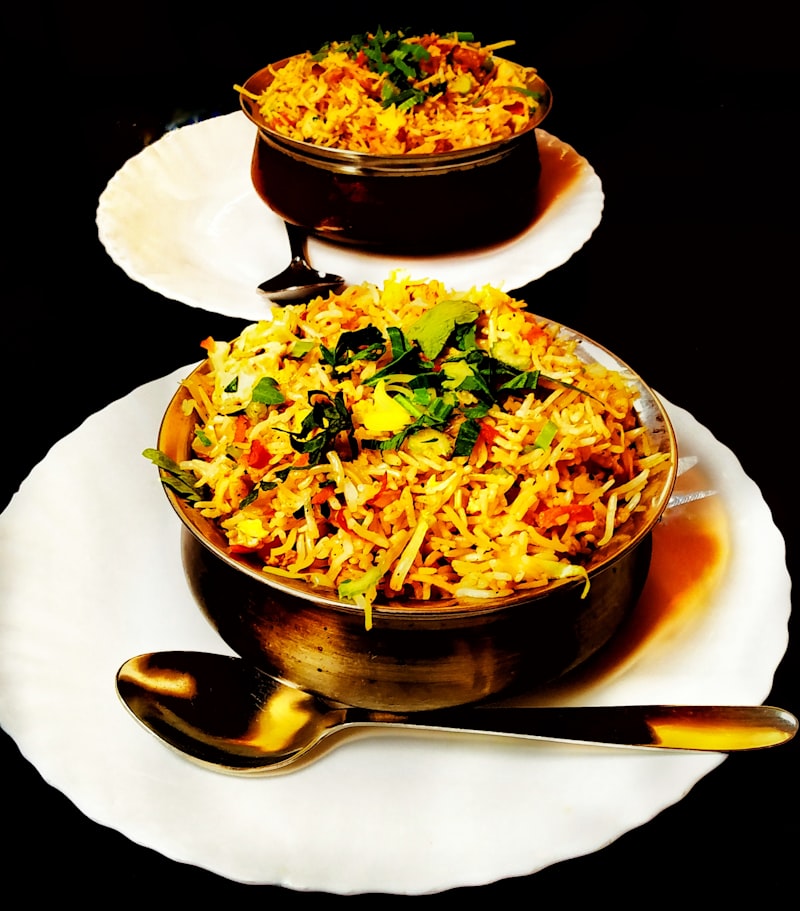
Awadhi Dum Gosht Biryani
अवधी दम गोश्त बिरयानी (Devanagari)
The pinnacle of royal Lucknowi culinary art: tender lamb simmered in saffron-infused yakhni broth, layered with 70% par-cooked aged basmati and sealed with dough for gentle steam cooking.
अवधी दम गोश्त बिरयानी (Devanagari)
The pinnacle of royal Lucknowi culinary art: tender lamb simmered in saffron-infused yakhni broth, layered with 70% par-cooked aged basmati and sealed with dough for gentle steam cooking.
Scale Awadhi Dum Gosht Biryani automatically with CaterOps. Includes real-time mandi ingredient rates, LPG & diesel fuel ratios, labor overheads, and target profit analysis.
Exact measured quantities. Freshly sourced spices recommended.
Commercial banquet norm: 0.25 kg raw bone-in goat meat + 100g raw aged basmati rice per pax. Finished cooked yield is approx 420g per pax including raita accompaniment.
Heat ghee in a heavy copper or iron degchi. Add whole cloves, cardamom, and shahi jeera. Add mutton pieces and sear on high heat for 6 minutes until meat is lightly browned. Add ginger-garlic paste and sauté for 3 minutes.
Whisk yogurt with red chili powder, turmeric, and half the mace-cardamom powder. Turn heat to low and fold into the meat. Sauté until ghee separates. Add 2 cups water, cover and simmer gently for 40-45 minutes until mutton is 80% tender and a fragrant, thin gravy remains.
In a large vessel, bring 4 liters of water to a rolling boil with salt (water must taste like sea water), green cardamom, and bay leaf. Drain soaked rice and slide into boiling water. Cook for precisely 5-6 minutes until rice grain breaks into three pieces when pressed between thumb and finger (70% done). Drain immediately.
Layer par-boiled basmati gently over the tender mutton yakhni in the degchi. Drizzle saffron milk, kewra water, melted ghee, fried onions (birista), and mint leaves. Roll whole wheat dough into a snake and press along the rim of the pot. Press lid down firmly to form an airtight seal.
Place a heavy iron tawa over high heat for 5 minutes. Transfer sealed degchi onto the hot tawa. Reduce heat to lowest flame and cook on dum for 25 minutes. Turn off heat and allow to rest unopened for 15 minutes before cracking the wheat seal.
Never place the biryani degchi directly over an open burner during dum; the bottom layer of rice will scorch. The pre-heated cast iron tawa distributes heat with velvet uniformity.
If steam escapes through the dough seal, patch it immediately with a small dab of wet dough. Lost steam results in dry rice grains at the top layer.
For commercial banquets, divide into two 50-pax aluminum deghs rather than a single 100-pax degh. Weight of large deghs crushes lower rice grains into paste.
Developed in the imperial royal kitchens of Nawab Asaf-ud-Daula (1775-1797) in Lucknow during the construction of the Bara Imambara to feed both nobles and craftsmen with rich, nourishing, perfectly balanced rice and meat.
“Records the classical technique of infusing lamb with saffron water, kewra floral essence, and sealed clay-pot cooking over low cow-dung embers.”
An iconic Tamil Nadu dry fry featuring freshly dry-roasted Tellicherry peppercorns, fennel seeds, and shallots in cold-pressed gingelly oil.
Whole black urad dal and red kidney beans slow-simmered for hours over low heat, enriched with dairy butter, sweet cream, and finished with a charcoal dhungar smoke infusion.