
Ladi Pav
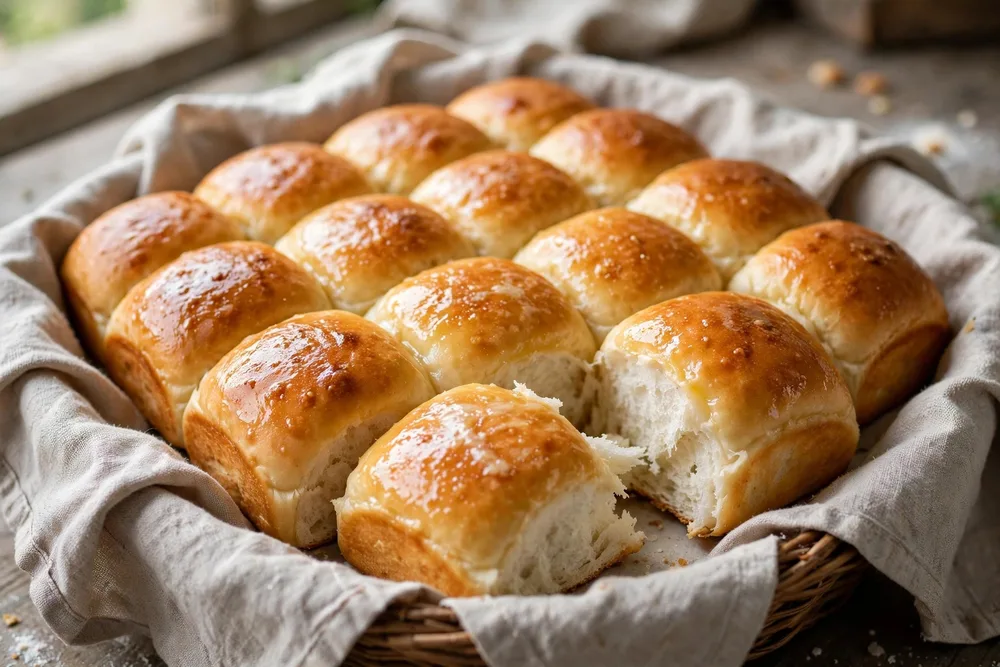
Mumbai's soft, square dinner rolls — the pav that carries misal, vada and xacuti, baked in a tray so they pull apart.
Base Batch
10 Pax
2 pav (about 85 g)
Prep / Cook
175m
25 min
Difficulty
medium–high
Commercial Standard
Cost / Portion
₹8.04
Illustrative Book Rate
Section 1 · At a Glance
Ingredients & Dynamic Pax Scaling Lab
Base formulated for 10 portions. Calibrate guest count, adjust catering buffer, or search specific ingredients below.
Batch Ingredient Cost
₹80
10 portions @ ₹8.04
Raw Batch Weight
~0.93 kg
Total raw commodities
Equipment Capacity
1 × GN 1/1
Standard chafing inserts
Scaling Factor
1.0× Base
10 Pax reference base
* Scaling — linear from base 10 (×5, ×10, ×50). Above 1,000 g shown as kg; above 1,000 ml as L. For 50+ portions, mix the
* dough in separate 50-portion batches — one very large dough proofs unevenly. Bake in separate trays; do not crowd two trays on one shelf, or the pav bake unevenly.
Step-by-Step Method & Critical Control Points (CCP)
Standard operating procedures with highlighted CCP warnings where execution failure compromises texture or food safety.
Activate the yeast. Mix the lukewarm milk, water, sugar and yeast; rest 10 minutes until frothy. **⚠ CCP—** temperature: lukewarm, not hot; hot liquid kills the yeast and the dough will not rise.
Make the dough. Mix maida and salt; add the yeast mixture and knead 8–10 minutes until smooth and elastic. Add the 40 g butter and knead until it is fully absorbed and the dough is soft and smooth.
First prove. Oil the bowl lightly, place the dough in it, cover, and prove in a warm place 1 hour until doubled.
Shape. Punch the dough down. Divide into 20 equal balls (about 45 g each). Roll each smooth and place them touching in a greased tray, in rows.
Second prove. Cover and prove 45 minutes until the balls have risen and are touching tightly — this is what makes ladi pav pull apart in a slab.
Bake. Brush the tops with the 20 ml milk. Bake at 180°C for 20–25 minutes until golden on top. **⚠ CCP—** colour: golden, not pale and not dark brown; pale pav are underbaked inside.
Finish. Brush with the 20 g butter while hot. Cool 10 minutes in the tray, then turn out. Done when: soft, light, golden on top, pulling apart in a slab, no yeasty smell.
Serve. 2 pav per portion. Serve warm with misal, vada pav filling, or xacuti.
ℹ CCP = critical control point — the moment where getting it wrong spoils the dish or makes it unsafe.
Tips & Tricks + Common Mistakes to Avoid
- •Knead until the dough is smooth and elastic — under-kneaded dough bakes dense.
- •Prove in a warm place; a cold kitchen doubles the proving time.
- •Brush with butter the moment the pav leave the oven — it keeps the tops soft.
- •Hot liquid killing the yeast — the dough never rises and the pav bake like stones.
- •Under-proving — dense, heavy pav with a tight crumb.
- •Over-baking — the tops darken and the pav dry out.
Section 5 · Nutrition — (2 pav (about 85 g)
Standard food-composition estimates derived from the raw ingredient list.
Energy
210 kcal
Avg: 259 kcal
Protein
5 g
Avg: 10 g
Carbohydrate
36 g
Avg: 33 g
Fat
5 g
Avg: 10 g
Fibre
2 g
Avg: 2 g
Sodium
290 mg
Avg: 434 mg
69%
36 g
10%
5 g
22%
5 g
Energy split: carbohydrate 69% · protein 10% · fat 22%.
Check: 5×4 + 36×4 + 5×9 = 209 kcal, stated 210 kcal (rounded estimate).
Section 6 · Fun Fact & Origin
'Ladi' means a row or a slab — ladi pav is baked in touching rows and pulls apart in a slab. Pav is widely documented as a Portuguese introduction to western India, carried from Goa to Mumbai. Origin: not documented — no single inventor reliably recorded.
Section 7 · Regional Traditions
Ladi pav belongs to Mumbai, where it is the bread that goes with everything — misal, vada pav, pav bhaji, xacuti. It is baked in trays in the city's bakeries every morning, and at a wedding it is the bread of the live counters, butter-toasted on the tawa and served hot.
Three Commercial Variations
Brush with garlic butter as the pav leave the oven and serve warm in a cloth-lined basket.
Use water instead of milk for the dough and skip the butter brush. The pav are less rich but still soft. Saves about ₹2.40 per portion (see §11).
Use half maida and half whole wheat flour; prove 15 minutes longer and serve warm.
Production Intelligence & Banquet Logistics
Batch Yield
20 pav × about 43 g = about 850 g from 500 g maida + 200 ml milk.
Prep Schedule
Standard prep
Portion Control
weigh the first five dough balls (about 45 g each) and count two pav per portion.
Holding Limits
Hot hold 65°C
- Yield: 20 pav × about 43 g = about 850 g from 500 g maida + 200 ml milk.
- Prep schedule (100 portions): mix and prove the dough the morning of the event; shape and bake in 50-portion trays so the pav are warm at service. One tray bakes in 25 minutes — plan the oven slots before service.
- Portion control: weigh the first five dough balls (about 45 g each) and count two pav per portion.
- Holding and service risks: serve fresh where possible; replenish in small batches rather than stacking large quantities. keep the pav covered in a cloth-lined basket and bake a fresh tray rather than holding one through a whole service.
Food Safety, Allergens & Thermal Holding
Allergen Classification (Chapter 4 Matrix)
Contains — Milk, Wheat. Not present — Egg, Fish, Nuts, Soy, Mustard, Sesame. Diet: Veg.
Ingredient Costing, Pairings & Waste Reduction
Per Portion Cost
₹8.04
Cost per portion = (sum of ingredient quantity × rate) ÷ portions. Ingredient cost only — water, cooking fuel, transport, labour, and commercial overheads are not included. All rates are illustrative book planning benchmarks; replace with your live mandi rates.
Cost Driver Composition
Interactive Margin & Profit Simulator
Calibrate your catering client quote to verify commercial profit margins.
Quoted Revenue
₹2,400
Food Cost
₹804
Gross Profit
₹1,596
Profitable Menu Pairings
Kitchen Waste Reduction & Yield Strategy
The biggest waste is a tray of pav baked too early and gone stale. Bake to the service time in 50-portion trays and keep them covered in a cloth-lined basket.