
Kanchipuram Idli
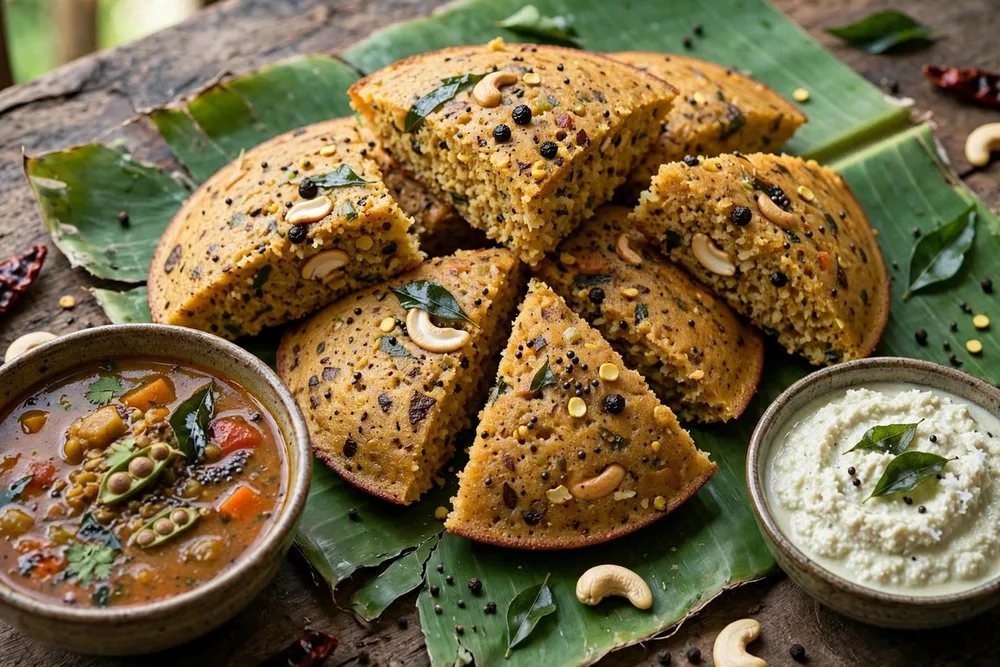
Spiced, peppery idli from the temple town of Kanchipuram — studded with pepper, cumin, ginger and cashew, steamed in a deep vessel.
Base Batch
10 Pax
2 idlis (140 g)
Prep / Cook
520m
20 min
Difficulty
medium
Commercial Standard
Cost / Portion
₹11.68
Illustrative Book Rate
Section 1 · At a Glance
Ingredients & Dynamic Pax Scaling Lab
Base formulated for 10 portions. Calibrate guest count, adjust catering buffer, or search specific ingredients below.
Batch Ingredient Cost
₹117
10 portions @ ₹11.68
Raw Batch Weight
~1.26 kg
Total raw commodities
Equipment Capacity
1 × GN 1/1
Standard chafing inserts
Scaling Factor
1.0× Base
10 Pax reference base
* Salt, spice, chilli and water do not scale perfectly — taste and adjust at every scale; never scale salt blindly.
* Scaling — linear from base 10 (×5, ×10, ×50). Above 1,000 g shown as kg; above 1,000 ml as L.
Step-by-Step Method & Critical Control Points (CCP)
Standard operating procedures with highlighted CCP warnings where execution failure compromises texture or food safety.
Soak the rice and dal with fenugreek, grind with water exactly as for plain idli, and ferment 8 hours or overnight.
Heat the ghee and fry the cashews until golden; lift out. In the same ghee fry the crushed peppercorns, cumin, curry leaves and asafoetida for 30 seconds.
Fold the tempering, cashews and dry ginger powder into the fermented batter with the salt.
Grease a deep vessel or large idli moulds with oil. Pour the batter in — **⚠ CCP:** fill only two-thirds full, because this batter rises higher than plain idli batter.
Steam 18–20 minutes until a skewer comes out clean. Rest 5 minutes, cut into wedges if steamed in one vessel, and serve hot with sambar and chutney.
ℹ CCP = critical control point — the moment where getting it wrong spoils the dish or makes it unsafe.
Tips & Tricks + Common Mistakes to Avoid
- •Crush the pepper coarse — fine pepper disappears into the batter.
- •The ghee tempering is the flavour; do not skip it or substitute oil.
- •Cut wedges only after resting, or they crumble.
- •Filling the vessel too full — batter overflows into the steamer water.
- •Under-steaming — the centre stays wet and dense.
- •Adding the spices before fermentation — they slow the rise.
Section 5 · Nutrition — (2 idlis (140 g)
Standard food-composition estimates derived from the raw ingredient list.
Energy
285 kcal
Avg: 259 kcal
Protein
10 g
Avg: 10 g
Carbohydrate
52 g
Avg: 33 g
Fat
4 g
Avg: 10 g
Fibre
3 g
Avg: 2 g
Sodium
470 mg
Avg: 434 mg
73%
52 g
14%
10 g
13%
4 g
Energy split: carbohydrate 73% · protein 14% · fat 13%.
Check: 10×4 + 52×4 + 4×9 = 284 kcal, shown as 285 kcal (rounded). Sodium 470 mg comes from 1.2 g salt per portion.
Section 6 · Fun Fact & Origin
Fun fact: Kanchipuram idli is temple food — it is the prasadam of the Varadharaja Perumal temple in Kanchipuram, steamed in large vessels and served to devotees. The temple-prasadam association with Kanchipuram is widely documented; no single inventor or date is recorded. Origin: not documented — no reliable source found for a single place, person or date of first creation.
Section 7 · Regional Traditions
Kanchipuram idli belongs to Tamil Nadu's temple towns. It is served at weddings and festivals as a special breakfast, always with sambar and coconut chutney, and its peppery warmth sets it apart from plain idli.
Three Commercial Variations
Steam in individual banana-leaf cups and serve with a ladle of hot sambar poured over at the table.
Halve the cashews and use oil for half the ghee; keep the pepper and cumin at full strength.
Keep the spices, reduce the ghee to 15 g, and serve with vegetable sambar.
Production Intelligence & Banquet Logistics
Batch Yield
10 portions × 2 idlis = 20 idlis, about 1.4 kg.
Prep Schedule
ferment overnight; mix the tempering in the morning and steam in the last hour.
Portion Control
one mould = one idli; if steamed in one vessel, cut into equal weighed wedges.
Holding Limits
hold covered in the steamer no more than 30 minutes; steam fresh batches for a long service.
- Yield: 10 portions × 2 idlis = 20 idlis, about 1.4 kg.
- Prep schedule: ferment overnight; mix the tempering in the morning and steam in the last hour.
- Portion control: one mould = one idli; if steamed in one vessel, cut into equal weighed wedges.
- Holding: hold covered in the steamer no more than 30 minutes; steam fresh batches for a long service.
Food Safety, Allergens & Thermal Holding
Allergen Classification (Chapter 4 Matrix)
Contains — Milk, Nuts. Not present — Wheat, Egg, Fish, Soy, Mustard, Sesame. Diet: Veg.
Ingredient Costing, Pairings & Waste Reduction
Per Portion Cost
₹11.68
Cost per portion = (sum of ingredient quantity × rate) ÷ portions. Ingredient cost only — water, cooking fuel, transport, labour, and commercial overheads are not included. All rates are illustrative book planning benchmarks; replace with your live mandi rates.
Cost Driver Composition
Interactive Margin & Profit Simulator
Calibrate your catering client quote to verify commercial profit margins.
Quoted Revenue
₹3,500
Food Cost
₹1,168
Gross Profit
₹2,332
Profitable Menu Pairings
Kitchen Waste Reduction & Yield Strategy
Batter left over makes plain idlis the next morning. Wedges that break are served as sambar idli — cut idli in hot sambar — rather than thrown away.