
Grilled Cheese Sandwich
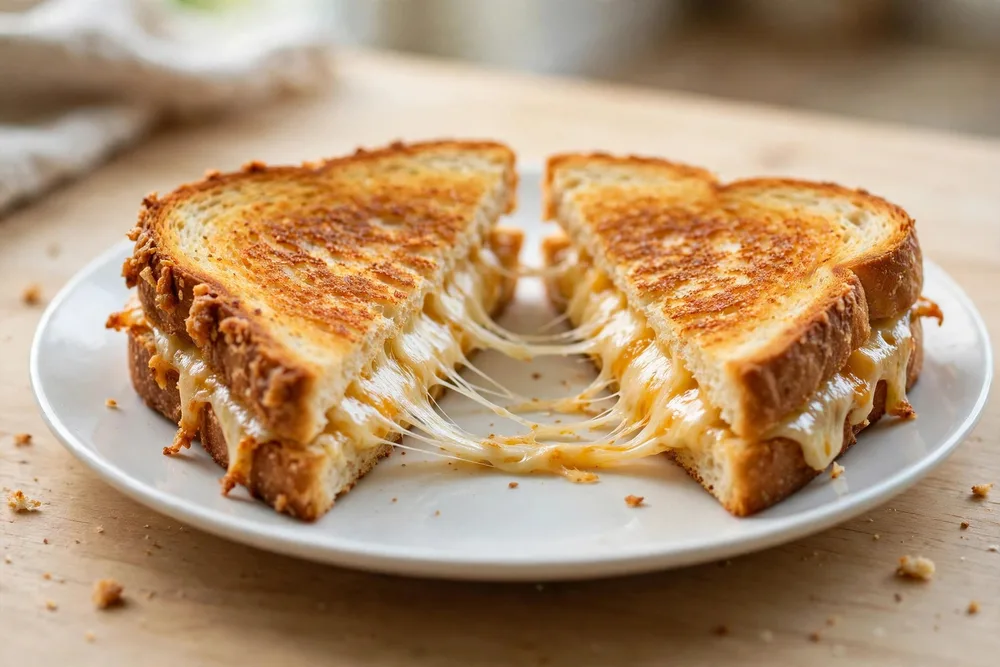
Golden toasted sandwich, molten cheese — the quick live-counter favourite
Base Batch
10 Pax
1 sandwich (2 triangles, about 180 g)
Prep / Cook
20m
10 min
Difficulty
easy
Commercial Standard
Cost / Portion
₹44.00
Illustrative Book Rate
Section 1 · At a Glance
Ingredients & Dynamic Pax Scaling Lab
Base formulated for 10 portions. Calibrate guest count, adjust catering buffer, or search specific ingredients below.
Batch Ingredient Cost
₹440
10 portions @ ₹44.00
Raw Batch Weight
~0.51 kg
Total raw commodities
Equipment Capacity
1 × GN 1/1
Standard chafing inserts
Scaling Factor
1.0× Base
10 Pax reference base
* Butter: 60 g for spreading on the bread, 40 g for the griddle. Cheese slices: 2 per sandwich.
* Scaling — linear from base 10 (×5, ×10, ×50). Above 1,000 g shown as kg; above
* 1,000 ml as L. Salt, spice, chilli and water: taste and adjust — never scale blindly.
Step-by-Step Method & Critical Control Points (CCP)
Standard operating procedures with highlighted CCP warnings where execution failure compromises texture or food safety.
Spread. Spread chutney on one side of 10 slices. Lay 2 cheese slices, tomato and capsicum on each, season with pepper and salt, and close with the remaining slices.
Butter the outside. Butter the outer faces of every sandwich — this is what browns and crisps. **⚠ CCP:** butter evenly to the edges, or the corners stay pale and dry.
Heat the griddle. Heat a flat griddle or tawa on medium heat. It is ready when a drop of water sizzles and dries at once.
Grill — first side. Place sandwiches on the griddle, press gently with a spatula, and grill 2–3 minutes until deep golden. **⚠ CCP:** medium heat only — high heat burns the bread before the cheese melts.
Turn once. Turn, press again, and grill 2–3 minutes more until the second side is golden and cheese oozes at the edges.
Cut and serve. Cut each sandwich diagonally into 2 triangles. Serve at once, 2 triangles per portion, with tomato ketchup or extra chutney. Done when: golden and crisp outside, cheese fully melted inside.
ℹ CCP = critical control point — the moment where getting it wrong spoils the dish or makes it unsafe.
Tips & Tricks + Common Mistakes to Avoid
- •Grate the cheese instead of slices for faster, even melting at 100+ portions
- •Keep the chutney thin so the sandwich does not go soggy.
- •High heat (burnt outside, cold cheese inside)
- •Overfilling (cheese leaks and burns on the griddle)
- •Holding finished sandwiches (they steam soft in minutes).
Section 5 · Nutrition — 1 sandwich (2 triangles, about 180 g)
Standard food-composition estimates derived from the raw ingredient list.
Energy
380 kcal
Avg: 259 kcal
Protein
14 g
Avg: 10 g
Carbohydrate
38 g
Avg: 33 g
Fat
19 g
Avg: 10 g
Fibre
2 g
Avg: 2 g
Sodium
620 mg
Avg: 434 mg
40%
38 g
15%
14 g
45%
19 g
Energy split: carbohydrate 40% · protein 15% · fat 45%.
Section 6 · Fun Fact & Origin
The grilled cheese sandwich is widely documented as popularised in the United States in the 1920s–1930s, when sliced bread and processed cheese made it a cheap, quick lunch; it reached Indian menus through cafes and live counters. No single inventor is reliably documented.
Section 7 · Regional Traditions
A Pan-India, continental snack rather than a regional dish: served at birthday parties, school canteens, cafes and wedding live counters across India, usually as a tea-time or late-evening snack, cut into triangles and eaten by hand.
Three Commercial Variations
three-cheese filling (cheddar + mozzarella + a little processed cheese) on sourdough, grilled in butter with a garlic-butter brush.
one cheese slice per sandwich with grated cheese to fill the gaps, and oil instead of half the butter.
whole-wheat bread, low-fat cheese, tomato and capsicum doubled, butter halved and the sandwich toasted dry in a sandwich press.
Production Intelligence & Banquet Logistics
Batch Yield
10 sandwiches (20 triangles) from 20 slices and 400 g cheese.
Prep Schedule
Standard prep
Portion Control
2 cheese slices per sandwich, weighed once per batch.
Holding Limits
do not hold — grill to order in batches of 10; a finished sandwich softens within 10 minutes.
- Yield: 10 sandwiches (20 triangles) from 20 slices and 400 g cheese.
- Prep: slice tomato and capsicum and portion cheese the morning of the event.
- Portion control: 2 cheese slices per sandwich, weighed once per batch.
- Holding: do not hold — grill to order in batches of 10; a finished sandwich softens within 10 minutes.
- Risk: griddle temperature drifting up during a long service — check the first sandwich of every batch.
Food Safety, Allergens & Thermal Holding
Allergen Classification (Chapter 4 Matrix)
Contains — Milk, Wheat. Not present — Egg, Fish, Nuts, Soy, Mustard, Sesame. Diet: Veg.
Ingredient Costing, Pairings & Waste Reduction
Per Portion Cost
₹44.00
Cost per portion = (sum of ingredient quantity × rate) ÷ portions. Ingredient cost only — water, cooking fuel, transport, labour, and commercial overheads are not included. All rates are illustrative book planning benchmarks; replace with your live mandi rates.
Cost Driver Composition
Interactive Margin & Profit Simulator
Calibrate your catering client quote to verify commercial profit margins.
Quoted Revenue
₹13,200
Food Cost
₹4,400
Gross Profit
₹8,800
Profitable Menu Pairings
Kitchen Waste Reduction & Yield Strategy
Trimmed bread crusts and capsicum offcuts go into breadcrumbs and soup stock, not the bin. Grill only against live orders — an over-grilled batch is the main waste here.