
Tomato Pasta
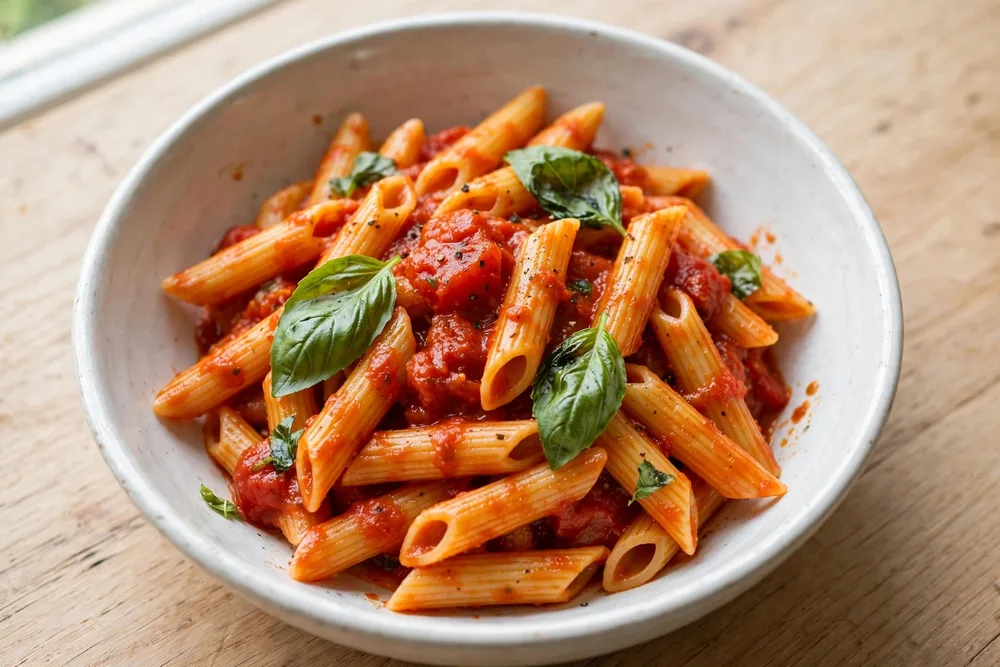
Penne in a slow-cooked tomato sauce — the safe, popular continental main
Base Batch
10 Pax
250 g (pasta + sauce)
Prep / Cook
45m
30 min
Difficulty
easy
Commercial Standard
Cost / Portion
₹35.40
Illustrative Book Rate
Section 1 · At a Glance
Ingredients & Dynamic Pax Scaling Lab
Base formulated for 10 portions. Calibrate guest count, adjust catering buffer, or search specific ingredients below.
Batch Ingredient Cost
₹354
10 portions @ ₹35.40
Raw Batch Weight
~4.73 kg
Total raw commodities
Equipment Capacity
1 × GN 1/1
Standard chafing inserts
Scaling Factor
1.0× Base
10 Pax reference base
* Water is the boiling water for the pasta; it is drained, not served. Salt: 8 g in the pasta water, 4 g in the sauce.
* Scaling — linear from base 10 (×5, ×10, ×50). Above 1,000 g shown as kg; above
* 1,000 ml as L. Salt, spice, chilli and water: taste and adjust — never scale blindly.
Step-by-Step Method & Critical Control Points (CCP)
Standard operating procedures with highlighted CCP warnings where execution failure compromises texture or food safety.
Boil the pasta. Boil the water with 8 g salt; add penne and cook until just tender (al dente), 9–11 minutes. Drain, toss with a little oil, and keep warm. **⚠ CCP:** do not overcook — soft pasta turns to mush when it meets hot sauce.
Start the sauce. Heat the olive oil; fry garlic 30 seconds, then onion until soft and translucent, about 5 minutes.
Add tomatoes. Add tomatoes, chilli flakes, sugar and the remaining 4 g salt. Cook on medium heat, stirring, until the tomatoes break down, about 15 minutes.
Wait for the sauce to thicken — **⚠ CCP.** Keep cooking until the sauce coats a spoon and the raw tomato smell is gone. A thin, watery sauce slides off the pasta.
Finish the sauce. Tear in the basil, taste and adjust salt and sugar. The sauce should taste bright and tomatoey, with gentle heat.
Combine and serve. Toss the hot pasta through the sauce for 1 minute so every piece is coated. Serve 250 g per portion, scattered with parmesan. Done when: glossy, evenly coated penne, sauce clinging, not pooling.
ℹ CCP = critical control point — the moment where getting it wrong spoils the dish or makes it unsafe.
Tips & Tricks + Common Mistakes to Avoid
- •Cook pasta in small batches for 100+ portions and sauce it to order
- •Reserve a cup of pasta water to loosen the sauce.
- •Overcooking the pasta
- •Undercooking the sauce (raw, sour taste)
- •Saucing cold pasta (the sauce never clings).
Section 5 · Nutrition — 250 g (pasta + sauce)
Standard food-composition estimates derived from the raw ingredient list.
Energy
420 kcal
Avg: 259 kcal
Protein
13 g
Avg: 10 g
Carbohydrate
62 g
Avg: 33 g
Fat
13 g
Avg: 10 g
Fibre
5 g
Avg: 2 g
Sodium
480 mg
Avg: 434 mg
59%
62 g
12%
13 g
28%
13 g
Energy split: carbohydrate 59% · protein 12% · fat 28%.
Section 6 · Fun Fact & Origin
Pasta with tomato sauce is documented from Naples, Italy, in the 19th century, after tomatoes — brought from the Americas — became a kitchen staple there. No single inventor is reliably documented.
Section 7 · Regional Traditions
An Italian dish, now Pan-India: served at weddings, birthdays and corporate lunches across India, usually as the continental option beside Indian mains, and a standard children's choice at any buffet.
Three Commercial Variations
finish with extra-virgin olive oil, fresh basil and shaved parmesan at the counter; add roasted cherry tomatoes.
replace half the olive oil with refined oil and halve the parmesan; keep the slow tomato cook — it carries the flavour.
whole-wheat penne, olive oil to 40 ml, parmesan to 50 g, and stir 200 g chopped spinach into the sauce.
Production Intelligence & Banquet Logistics
Batch Yield
10 portions × 250 g = 2.5 kg, from 800 g dry penne.
Prep Schedule
Standard prep
Portion Control
one 250 g ladle of sauced pasta.
Holding Limits
hold sauce hot and pasta warm separately; combine in small batches, or the pasta swells and softens.
- Yield: 10 portions × 250 g = 2.5 kg, from 800 g dry penne.
- Prep: chop onion, garlic and tomatoes the morning of the event; make the sauce a day ahead and chill — it improves overnight.
- Portion control: one 250 g ladle of sauced pasta.
- Holding: hold sauce hot and pasta warm separately; combine in small batches, or the pasta swells and softens.
- Risk: pasta cooked too early — cook in 50-portion batches through service.
Food Safety, Allergens & Thermal Holding
Allergen Classification (Chapter 4 Matrix)
Contains — Milk, Wheat. Not present — Egg, Fish, Nuts, Soy, Mustard, Sesame. Diet: Veg.
Ingredient Costing, Pairings & Waste Reduction
Per Portion Cost
₹35.40
Cost per portion = (sum of ingredient quantity × rate) ÷ portions. Ingredient cost only — water, cooking fuel, transport, labour, and commercial overheads are not included. All rates are illustrative book planning benchmarks; replace with your live mandi rates.
Cost Driver Composition
Interactive Margin & Profit Simulator
Calibrate your catering client quote to verify commercial profit margins.
Quoted Revenue
₹10,600
Food Cost
₹3,540
Gross Profit
₹7,060
Profitable Menu Pairings
Kitchen Waste Reduction & Yield Strategy
Leftover plain pasta (never sauced pasta) can be chilled and used the next day in a pasta salad or baked pasta. Leftover sauce freezes in 10-portion packs for the next event.